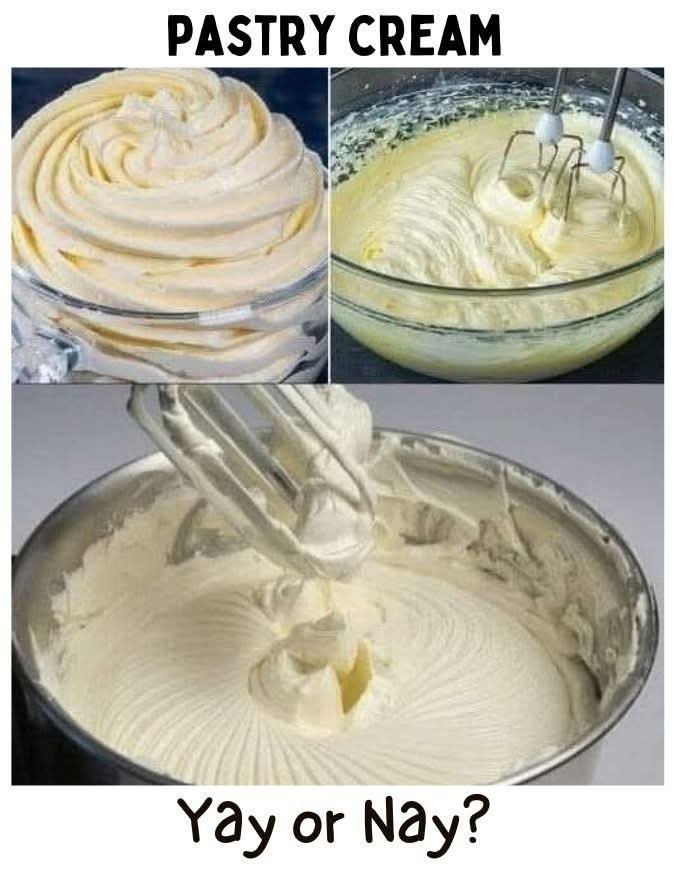
The Key to the Ideal Pastry Cream (Crème Pâtissière)
Perfect pastry cream is smooth, rich, thick—but not stiff, and never lumpy or eggy. The secret isn’t just the ingredients—it’s technique and temperature control.
🥛 1. Use the Right Ratio
A balanced pastry cream typically includes:
-
Milk (for smooth texture)
-
Egg yolks (for richness & color)
-
Sugar (sweetness + stability)
-
Cornstarch (main thickener)
-
Butter (silky finish)
-
Vanilla (flavor)
Too much starch → gluey
Too little starch → runny
🔥 2. Control the Heat (Most Important Step)
Pastry cream thickens between 170–180°F (77–82°C).
-
Heat milk until just steaming (not boiling hard).
-
Temper the eggs slowly with hot milk.
-
Cook over medium heat, whisking constantly.
-
Once thick, cook 1–2 minutes more to remove raw starch taste.
If overheated, eggs scramble.
If undercooked, cream won’t set properly.
🥄 3. Whisk Constantly
Continuous whisking:
-
Prevents lumps
-
Stops eggs from curdling
-
Keeps texture smooth
Use a heavy-bottomed saucepan for even heat.
🧈 4. Finish with Butter (Off Heat)
Add butter after removing from heat.
This:
-
Adds shine
-
Improves mouthfeel
-
Prevents rubbery texture
❄️ 5. Cool It Correctly
-
Transfer immediately to a clean bowl.
-
Press plastic wrap directly onto the surface.
-
Chill quickly.
This prevents a skin from forming.
✨ 6. Strain for Perfection
For ultra-smooth pastry cream (like in professional patisserie), strain through a fine sieve before chilling.
Quick Professional Tip
For bakery-level smoothness:
-
Use half milk + half heavy cream.
-
Add a small pinch of salt to enhance flavor.
-
Let it chill at least 2 hours before using.
If you’d like, I can also share:
-
🍫 Chocolate pastry cream
-
☕ Coffee pastry cream
-
🍓 Fruit-flavored variations
-
🥐 How to use it for éclairs, tarts, or mille-feuille