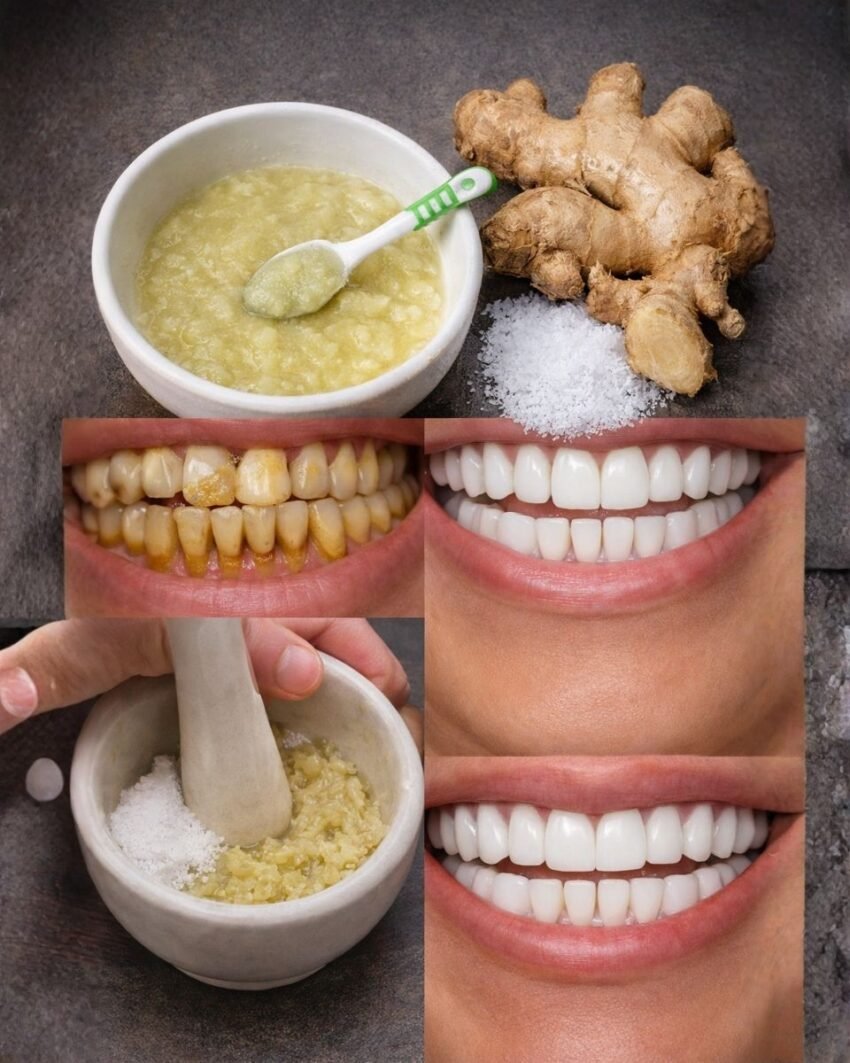
Ginger and Salt for Whiter Teeth: Does It Really Work?
Short answer: It may remove surface stains temporarily, but it won’t truly whiten teeth—and it can damage enamel if used incorrectly.
Why People Use Ginger & Salt
-
Salt is mildly abrasive and can scrub off surface stains (coffee, tea).
-
Ginger has antibacterial properties that may help with oral freshness.
This can make teeth look a bit cleaner, not whiter.
The Risks ⚠️
-
Enamel erosion: Salt is abrasive; frequent rubbing can wear enamel.
-
Tooth sensitivity: Damaged enamel exposes sensitive layers.
-
Gum irritation: Ginger can be harsh on soft tissue.
Once enamel is worn down, it does not grow back.
If You Still Want to Try It (Safer Method)
Use very occasionally—no more than once every 1–2 weeks.
How:
-
Mix a pinch of fine salt with a tiny amount of fresh ginger juice or water.
-
Gently brush with a soft toothbrush for 10–15 seconds only.
-
Rinse thoroughly.
-
Follow with regular fluoride toothpaste.
Stop immediately if you feel sensitivity or gum discomfort.
Better, Safer Alternatives for Whiter Teeth
-
Brush twice daily with fluoride toothpaste
-
Use baking soda toothpaste (formulated, not DIY)
-
Professional whitening or dentist-approved strips
-
Regular dental cleanings (best for stain removal)
Bottom Line
Ginger and salt may offer minor, short-term cosmetic cleaning, but they are not a safe whitening solution when used often. For lasting results and healthy teeth, stick with dentist-approved methods.
If you want, I can share:
-
Natural but enamel-safe whitening options
-
Senior-friendly oral care routines
-
Foods that stain teeth the least