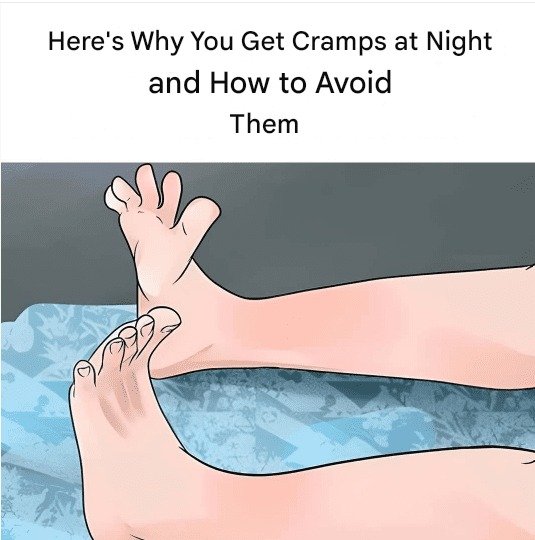
Nighttime cramps are the worst 😖—and yep, there are real reasons they love to strike after dark.
This Is Why We Get Cramps at Night
🦵 Muscles cool down and tighten
When you’re resting or sleeping, muscles aren’t moving much. Less movement = tighter muscles = higher chance of cramping.
💧 Dehydration sneaks up on you
Even mild dehydration (or low electrolytes like magnesium, potassium, or calcium) can trigger cramps—and it often shows up at night.
🛏️ Sleeping position matters
Pointing your toes downward or sleeping with bent legs can shorten calf muscles, making them more likely to spasm suddenly.
🩸 Reduced circulation
Lying down changes blood flow. For some people, that shift can irritate nerves or muscles.
🧠 Nerve signaling glitches
Muscles relax at night, but sometimes the “off switch” misfires, causing involuntary contractions.
🧂 Medication & health factors
Certain meds (diuretics, statins) and conditions (pregnancy, diabetes, nerve compression) can raise cramp risk.
How to Prevent Night Cramps
-
Stretch calves and feet before bed
-
Stay hydrated throughout the day
-
Eat magnesium-rich foods (nuts, leafy greens)
-
Wear loose sheets / avoid toe-pointing
-
Gentle walking or light stretching if one hits
When to Check With a Doctor
If cramps are severe, frequent, one-sided, or worsening, or come with swelling or redness, it’s worth getting checked.
If you want, I can:
-
Turn this into a short social media post
-
Share quick stretches that stop a cramp fast
-
Explain the magnesium connection in more detail