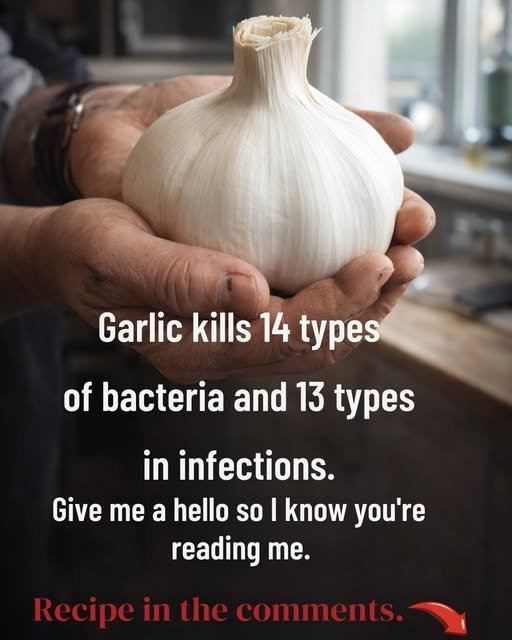
Here’s a careful, evidence-based explanation about garlic as a natural antibiotic—balancing the enthusiasm of statements like “wipes out infections” with scientific reality: 🧄
🧄 Garlic: The Natural Antibiotic?
Why Garlic Is Called “Nature’s Antibiotic”
-
Garlic contains allicin, a sulfur compound released when garlic is crushed or chopped.
-
Allicin has antimicrobial properties, showing activity against:
-
Certain bacteria (like E. coli, Salmonella)
-
Some viruses and fungi in lab studies
-
-
This is why garlic is historically used in folk medicine for:
-
Colds and flu
-
Minor infections
-
Digestive support
-
Important Clarifications
-
Not a replacement for medical antibiotics
-
Garlic may support immune function, but it cannot cure serious bacterial infections.
-
Conditions like strep throat, pneumonia, or urinary tract infections require professional medical care.
-
-
Effectiveness depends on preparation
-
Raw, crushed garlic → highest allicin content
-
Cooked garlic → loses much of its antibiotic potency
-
Supplements vary widely in allicin concentration
-
-
Safety & interactions
-
Large amounts can cause stomach upset, heartburn, or garlic breath
-
Can thin blood and interact with blood thinners or anticoagulants
-
Allergies are possible, though rare
-
Practical Uses
-
Dietary support: Add fresh, crushed garlic to meals for general immune support
-
Preventive care: May help reduce mild colds when used regularly
-
Topical (for minor skin issues): Garlic can irritate skin; always dilute or avoid raw application on broken skin
✅ Takeaway
Garlic is a powerful antimicrobial food that supports health but is not a magic cure. It works best as part of a balanced diet and healthy lifestyle, not as a replacement for prescription antibiotics.
If you want, I can create a “Garlic for Health” guide showing:
-
How to maximize allicin
-
Safe daily amounts
-
Recipes for immune-boosting garlic dishes