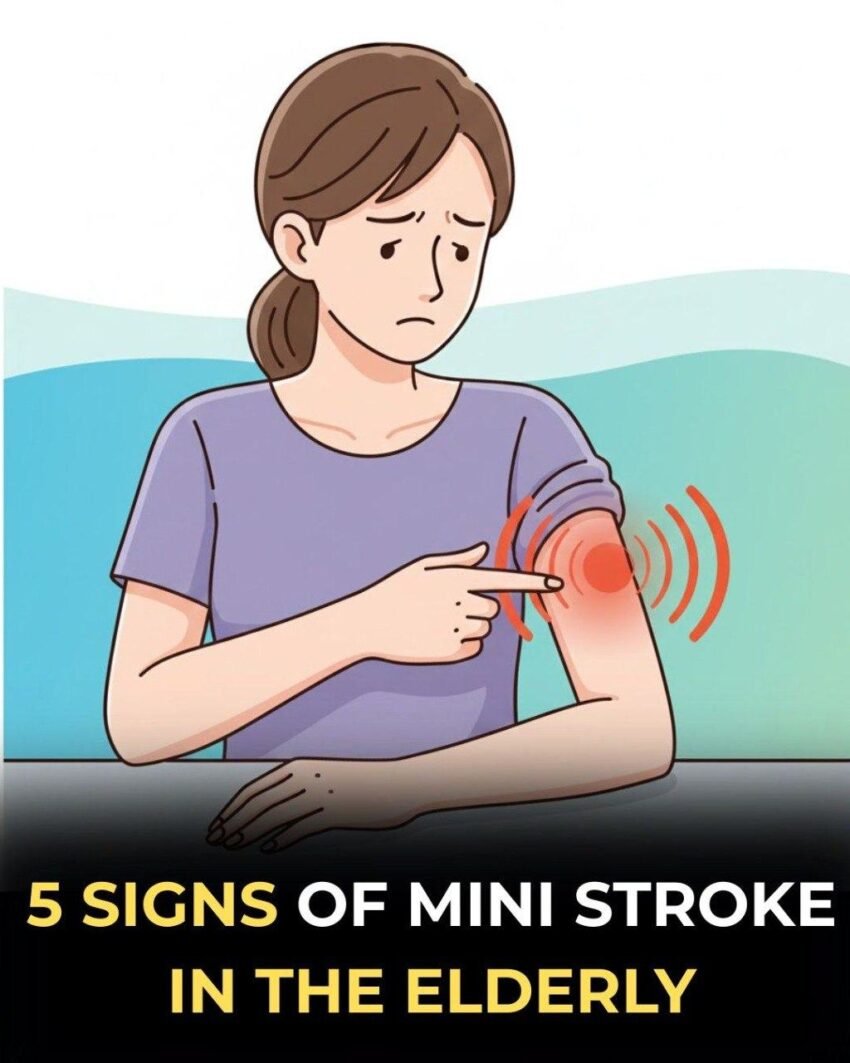
Here are 5 important signs of a mini-stroke (TIA) in the elderly. A mini-stroke is temporary, but it’s a medical emergency because it strongly predicts a full stroke.
5 Signs of a Mini Stroke (TIA) in the Elderly
1. Sudden Weakness or Numbness
-
Often affects one side of the body
-
Face drooping, arm or leg weakness, or numbness
-
May last minutes to hours, then resolve
2. Trouble Speaking or Understanding Speech
-
Slurred speech
-
Difficulty finding words
-
Confusion when listening to others
3. Sudden Vision Problems
-
Blurred or double vision
-
Loss of vision in one or both eyes
-
“Curtain-like” vision loss
4. Sudden Dizziness or Loss of Balance
-
Trouble walking
-
Poor coordination
-
Feeling lightheaded or unsteady
5. Sudden Severe Headache or Confusion
-
Headache with no known cause
-
Sudden mental confusion or memory trouble
-
May be mistaken for dementia or “just aging”
⚠️ Why Mini Strokes Are Dangerous
-
Symptoms often go away, leading people to ignore them
-
Up to 1 in 3 people who have a TIA will have a major stroke later
-
The highest risk is within 48 hours
🚨 What to Do Immediately
Use FAST:
-
Face drooping
-
Arm weakness
-
Speech difficulty
-
Time to call emergency services
👉 Call emergency services immediately, even if symptoms disappear.
Extra Risk Factors in the Elderly
-
High blood pressure
-
Atrial fibrillation
-
Diabetes
-
Smoking
-
High cholesterol
-
Prior stroke or TIA
If you’d like, I can also provide:
-
Differences between TIA vs. full stroke
-
Prevention tips after a mini stroke
-
When confusion is stroke-related vs. dementia
Just tell me.