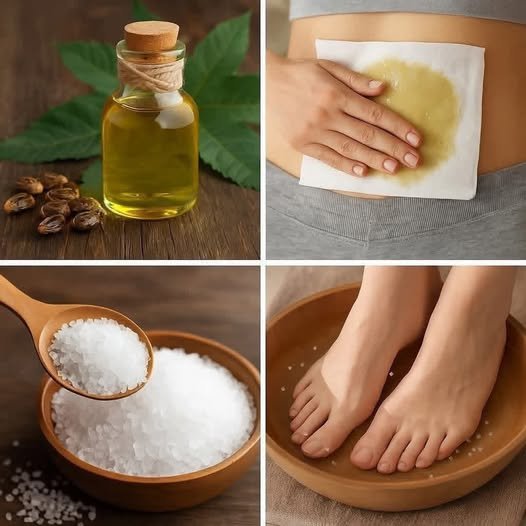
The combo of castor oil + Epsom salt is popular in natural-care circles, but it’s important to separate real, gentle benefits from exaggerated claims. Used externally and safely, this combination may help with muscle relaxation, temporary pain relief, and skin softening—it’s not a cure or detox.
🌿 What Each Ingredient Actually Does
🧴 Castor Oil
-
Thick, deeply moisturizing oil
-
Contains ricinoleic acid, which may help:
-
Reduce temporary inflammation
-
Improve skin softness
-
Support circulation when massaged
-
🧂 Epsom Salt (Magnesium Sulfate)
-
Commonly used in baths
-
Helps:
-
Relax muscles
-
Ease soreness
-
Reduce tension
-
-
Magnesium absorption through skin is debated, but warm baths are proven relaxing
✨ Realistic Benefits When Combined
✅ Muscle & joint relaxation
✅ Temporary relief from soreness or stiffness
✅ Stress relief & better sleep (from warm soak)
✅ Softened skin & improved massage glide
✅ Gentle support for tired feet or legs
❌ Does not detox organs
❌ Does not cure arthritis, nerve damage, or chronic disease
❌ Does not pull toxins from the body
🛁 How to Use Them Safely
Option 1: Relaxing Soak (Most Common)
-
1–2 cups Epsom salt
-
1–2 tbsp castor oil
-
Warm bath water
Soak 15–20 minutes, 2–3× per week
Option 2: Warm Compress (Targeted Relief)
-
Mix:
-
1 tbsp castor oil
-
1 tbsp Epsom salt
-
A little warm water
-
-
Soak a cloth in the mixture
-
Apply to sore area
-
Cover with towel
-
Leave 15–20 minutes
⚠️ Safety Notes (Very Important)
-
External use only
-
Patch test first (especially sensitive skin)
-
Avoid broken skin
-
Do not use during pregnancy without medical advice
-
Not for children
-
Stop if irritation occurs
🧠 Bottom Line
This combo is best viewed as a comfort & relaxation remedy, not a medical treatment. When used correctly, it can feel great—but the “amazing” claims online are often overstated.
If you want, I can also share:
-
A castor oil pack routine (traditional method)
-
Best uses for Epsom salt alone
-
What not to mix with castor oil
-
A sleep-boosting bath recipe