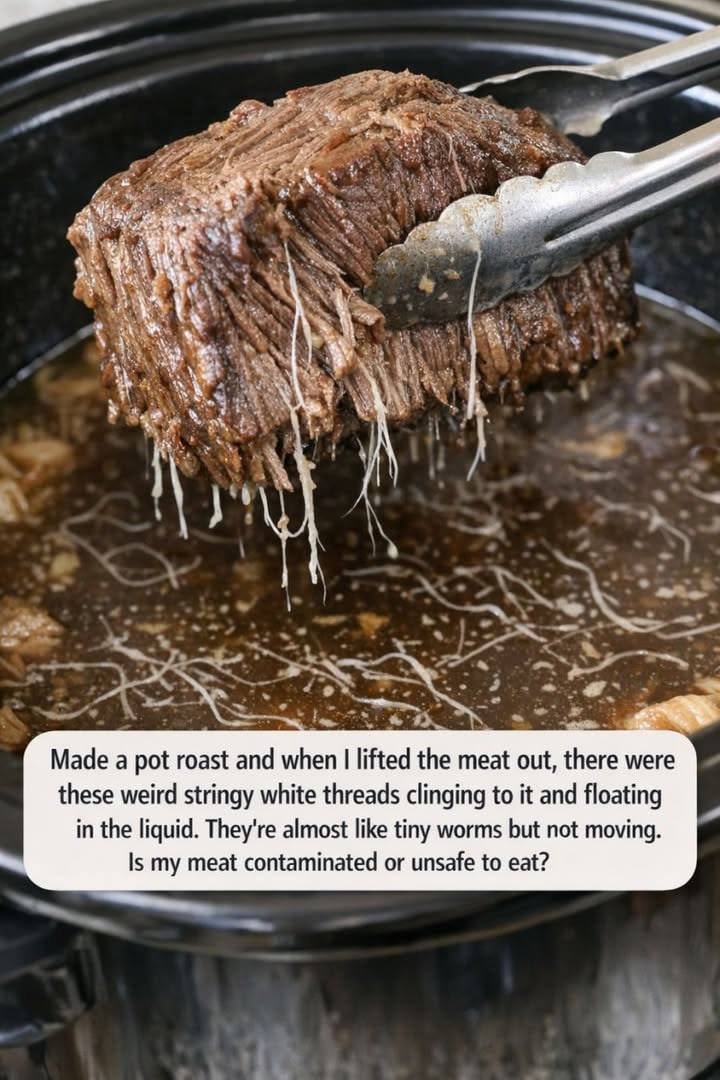
When you cook a pot roast, especially a chuck or shoulder cut, you’ll often see:
🧵 What Those Stringy White Threads Usually Are
1️⃣ Connective Tissue (Collagen)
Beef roasts are full of connective tissue.
As they cook low and slow, collagen:
-
Breaks down into gelatin
-
Turns pale or whitish
-
Can look like stringy threads in the liquid
This is normal — and actually what makes pot roast tender.
2️⃣ Coagulated Proteins
When meat cooks, proteins tighten and sometimes separate into pale strands.
They can float in broth and look unusual, but they’re harmless.
3️⃣ Fat & Tissue Fibers
Rendered fat and connective fibers can form stringy bits in the cooking liquid.
🚫 What It’s Not (In Almost All Cases)
Beef parasites that infect humans:
-
Are extremely rare in inspected commercial meat
-
Are killed by proper cooking
-
Do not appear as loose floating white threads after cooking
Actual parasitic worms in beef are uncommon in regulated food systems and would not typically show up as random loose threads after long cooking.
🔎 When To Be Concerned
Consider caution if:
-
The meat smelled bad before cooking
-
There’s a strong sour or rotten odor
-
The texture is slimy in an unusual way
-
You see distinct cyst-like bubbles inside raw meat before cooking
If none of those apply and it smelled and looked normal before cooking, it’s almost certainly safe.
If you’d like, tell me:
-
What cut of beef you used
-
How long you cooked it
-
Whether it smelled normal before cooking
I can help you narrow it down further.