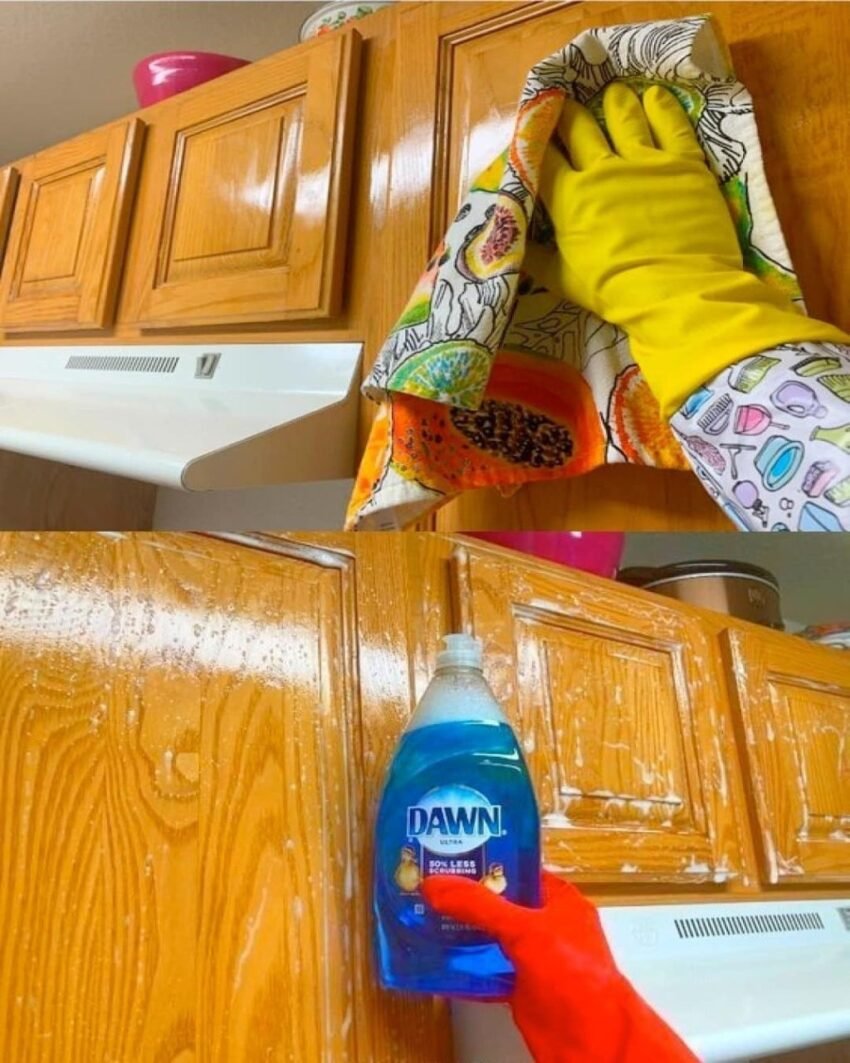
🧼 Say Goodbye to Grease: Effortless Kitchen Cabinet Cleaning Hack
Sticky cabinet buildup comes from cooking oils mixing with dust — and plain water won’t cut it. Here’s a simple, safe method that works on most sealed cabinets.
✨ The 3-Ingredient Grease-Cutting Mix
🧴 You’ll Need:
-
1 cup warm water
-
1–2 teaspoons dish soap (degreasing type)
-
1 tablespoon white vinegar
(Optional: ½ teaspoon baking soda for extra grime)
🧽 How to Clean Cabinets Properly
1️⃣ Test First
Try on a hidden spot to ensure no finish damage.
2️⃣ Wipe Gently
Dip a microfiber cloth in the solution (wring it out well — damp, not dripping).
Wipe cabinets in circular motions.
3️⃣ Focus on Handles & Edges
These areas collect the most grease.
4️⃣ Rinse Wipe
Use a clean damp cloth (water only) to remove residue.
5️⃣ Dry Immediately
Dry with a clean towel to prevent streaks or swelling.
🔥 For Heavy, Sticky Grease
Make a paste:
-
Baking soda + small amount of water
Apply gently with a soft cloth, rub lightly, wipe clean.
⚠️ Avoid scrubbing hard — especially on painted or wood cabinets.
🚫 Avoid These on Cabinets
-
Straight vinegar (can dull finish)
-
Bleach
-
Abrasive scrub pads
-
Ammonia
-
Soaking with excess water
🪵 Special Notes by Cabinet Type
-
Painted cabinets: Use minimal moisture.
-
Wood cabinets: Dry immediately; consider wood-safe cleaner.
-
Laminate: Usually more durable, but still avoid soaking.
💡 Pro Tip for Prevention
After cooking:
-
Run the range hood
-
Wipe cabinet surfaces weekly
-
Use a light furniture polish monthly (for sealed wood)
If you tell me:
-
Are your cabinets wood, painted, or laminate?
-
Is the grease light film or thick sticky buildup?
I can tailor the safest method specifically for yours.