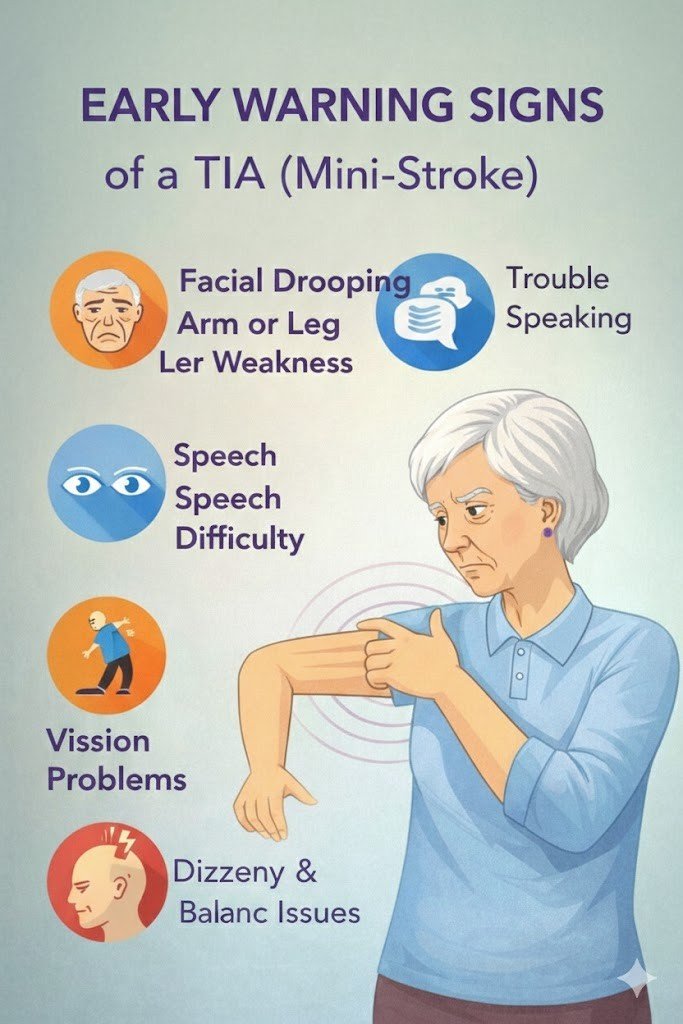
It happens when blood flow to part of the brain is temporarily blocked — symptoms resolve within minutes to hours, but it is a major warning sign of a future stroke.
In seniors especially, it should never be ignored.
🚨 5 Warning Signs of a Mini Stroke (TIA)
1️⃣ Sudden Weakness or Numbness (Especially One Side)
-
Face drooping
-
Arm weakness
-
Leg weakness
-
Numbness on one side of the body
This is the most classic sign.
2️⃣ Trouble Speaking or Understanding Speech
-
Slurred speech
-
Difficulty finding words
-
Confusion
-
Inability to understand others
Even if it lasts only a few minutes, it’s serious.
3️⃣ Sudden Vision Problems
-
Blurred vision
-
Double vision
-
Temporary vision loss in one eye
-
“Curtain” coming over vision
This can feel like vision briefly going dark.
4️⃣ Dizziness or Loss of Balance
-
Sudden unsteadiness
-
Trouble walking
-
Loss of coordination
-
Feeling like the room is spinning
Especially concerning if it appears suddenly and without explanation.
5️⃣ Sudden Severe Headache
-
Intense headache out of nowhere
-
Different from usual headaches
More common in certain types of stroke.
⚠️ Important: Symptoms Often Go Away
With a TIA:
-
Symptoms may last only 5–30 minutes
-
They may completely disappear
But that does NOT mean it’s harmless.
About 1 in 3 people who have a TIA will have a full stroke later — often within days to weeks.
🧠 Use the FAST Rule
-
F – Face drooping
-
A – Arm weakness
-
S – Speech difficulty
-
T – Time to call emergency services
Even if symptoms stop, seek immediate medical care.
🩺 Why Seniors Are Higher Risk
Risk increases with:
-
High blood pressure
-
Diabetes
-
Atrial fibrillation
-
High cholesterol
-
Smoking history
-
Age over 60
🚑 What To Do Immediately
If you suspect a mini stroke:
-
Call emergency services right away
-
Do not drive yourself
-
Note the time symptoms started
Early treatment can prevent a major stroke.
Bottom Line
A mini stroke is a medical emergency warning sign, not something to “wait and see.”
Fast action can save brain tissue — and possibly a life.
If you’d like, I can also explain how a TIA differs from a full stroke in simple terms.