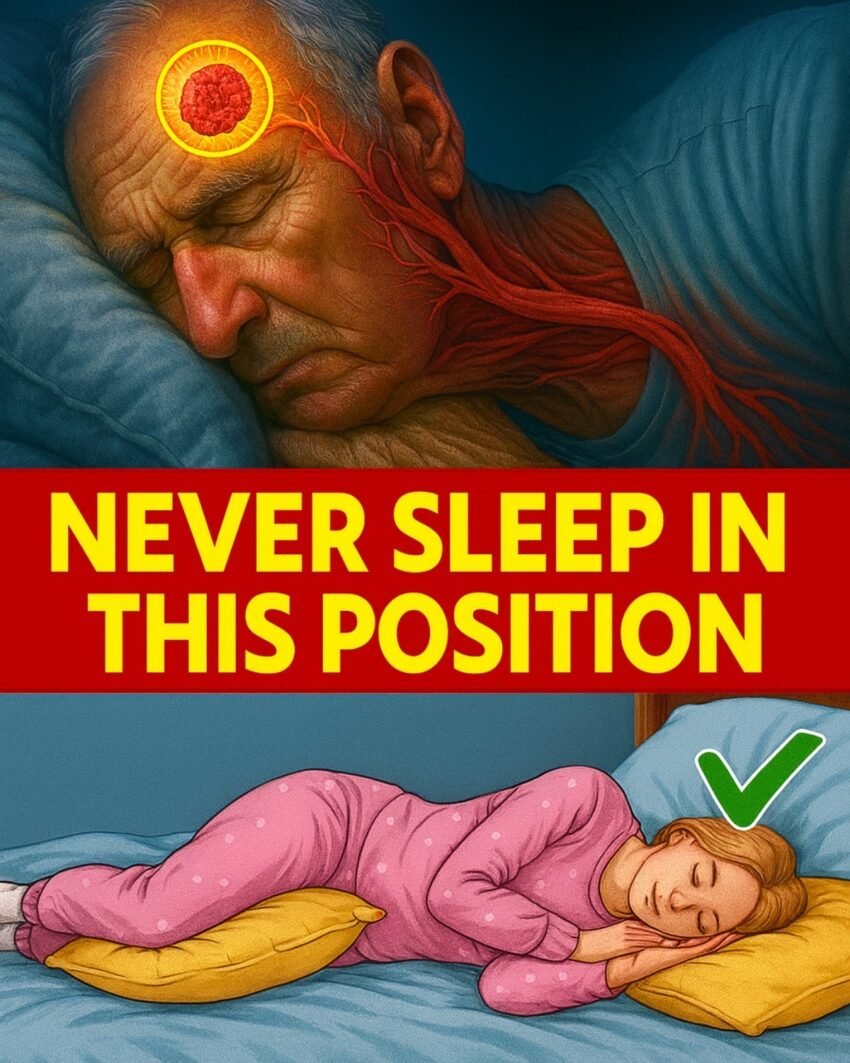
🛌 Supine (Back) Sleeping and Stroke Risk
Many health discussions point out that sleeping on your back (face-up) — known as the supine position — can worsen obstructive sleep apnea (OSA). OSA is when breathing repeatedly stops and starts during sleep, and it’s a known risk factor for high blood pressure, heart disease, and stroke.
-
Why this matters: OSA tends to be worse when people lie on their backs, because gravity allows the tongue and soft tissues to block the airway more easily.
-
Worse apnea means more stress on the heart and brain through repeated drops in oxygen levels at night, which is linked with stroke risk.
So in people with sleep apnea, sleeping on your back may indirectly raise stroke risk because it worsens the breathing problem.
🧠 What the Research Actually Shows
Note that no major clinical study has proven that back sleeping by itself causes strokes, especially in seniors without sleep disorders. Most of the evidence relates to conditions associated with stroke, like sleep apnea and irregular sleep patterns:
✅ Sleep apnea risk: Back sleeping significantly worsens sleep apnea in many people, and sleep apnea increases stroke risk.
✅ Irregular sleep patterns: Going to bed and waking up at different times may raise stroke and heart attack risk by disrupting body rhythms.
❌ Direct causal evidence linking back-sleeping to strokes across all seniors is not established. Most clinical data link sleep quality and breathing issues at night to increased cardiovascular risk rather than the position alone.
💡 What This Means for Seniors
If you are older and especially if you snore loudly or have breathing pauses at night:
-
Side sleeping is typically recommended — it tends to lessen airway collapse compared with sleeping on your back.
-
Back sleeping might worsen sleep apnea, and untreated sleep apnea is linked to higher stroke risk.
-
Monitor sleep quality and breathing — if you notice snoring, gasping, or daytime sleepiness, talk to a doctor about sleep apnea testing.
🧠 Bottom Line
➡️ Sleeping on your back isn’t outright proven to cause strokes.
➡️ But for people with or at risk for sleep apnea — especially many older adults — back sleeping can worsen breathing problems that are linked with stroke risk.
If you’d like, I can share practical tips to improve sleep quality and reduce cardiovascular risk as you age.