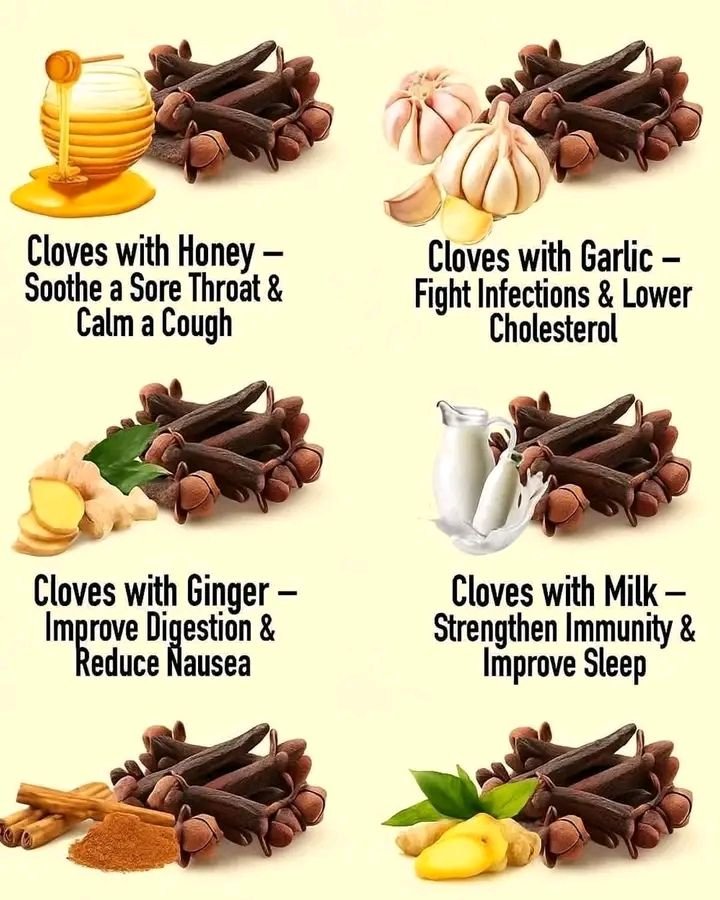
Cloves are small but powerful. Their key compound, eugenol, gives them antimicrobial, anti-inflammatory, antioxidant, and pain-relieving properties. Below are safe, traditional, evidence-supported uses—meant to support health, not replace medical care.
1. Toothache Relief
Why it works: Eugenol numbs pain and fights bacteria
How: Place 1 whole clove near the sore tooth or dab clove oil (diluted) on gums
2. Freshens Breath
Why: Antibacterial + aromatic
How: Chew 1 clove after meals
3. Digestive Support
Why: Stimulates digestive enzymes, reduces gas
How: Sip clove tea after meals (2–3 cloves steeped 10 min)
4. Reduces Bloating
Why: Carminative properties
How: Combine clove + fennel tea
5. Immune Support
Why: Antimicrobial & antioxidant
How: Add cloves to tea, soups, or warm water
6. Sore Throat Relief
Why: Antimicrobial + soothing
How: Gargle clove tea or suck gently on a clove
7. Cough & Cold Comfort
Why: Helps loosen mucus
How: Clove + ginger + honey tea
8. Blood Sugar Support
Why: May improve insulin sensitivity
How: Drink mild clove tea 3–4x/week (not daily long-term)
9. Anti-Inflammatory Support
Why: Eugenol reduces inflammation markers
How: Add cloves to cooking or tea
10. Natural Antifungal Aid
Why: Active against some fungi
How: Use clove oil (diluted) topically for fungal-prone areas
11. Nausea Relief
Why: Calms digestive tract
How: Sip warm clove water slowly
12. Improves Circulation
Why: Warming spice effect
How: Use in chai or spiced teas
13. Oral Health Rinse
Why: Reduces bacteria
How: Cool clove tea → use as mouth rinse
14. Headache Relief
Why: Analgesic effects
How: Inhale steam from clove-infused hot water
15. Joint Comfort
Why: Anti-inflammatory
How: Massage diluted clove oil on joints
16. Parasite Support (Traditional Use)
Why: Antimicrobial properties
How: Used in herbal blends under professional guidance
17. Improves Appetite
Why: Stimulates digestive secretions
How: Chew clove before meals occasionally
18. Skin Spot Treatment
Why: Antibacterial
How: Apply diluted clove oil to blemishes (spot test first)
19. Stress & Mental Fatigue Relief
Why: Warming aroma may improve alertness
How: Aromatherapy or clove-spiced tea
20. Natural Food Preserver
Why: Antimicrobial action
How: Add whole cloves to pickles or preserves
How to Make Simple Clove Tea
-
2–3 whole cloves
-
1½ cups hot (not boiling) water
-
Steep 10 minutes, strain
-
Optional: cinnamon or honey
Safety & Cautions ⚠️
-
Do not consume clove oil internally unless professionally guided
-
Excess cloves may irritate stomach or thin blood
-
Avoid large amounts if pregnant, on blood thinners, or before surgery
-
Best used in moderation, not daily long-term
Bottom Line
Cloves are a powerful natural ally for digestion, oral health, immunity, and inflammation—most effective when used occasionally and intentionally.
If you want, I can create:
-
A 7-day clove detox tea plan
-
Clove + bay leaf weight-support drinks
-
Clove remedies by symptom (cold, pain, digestion)