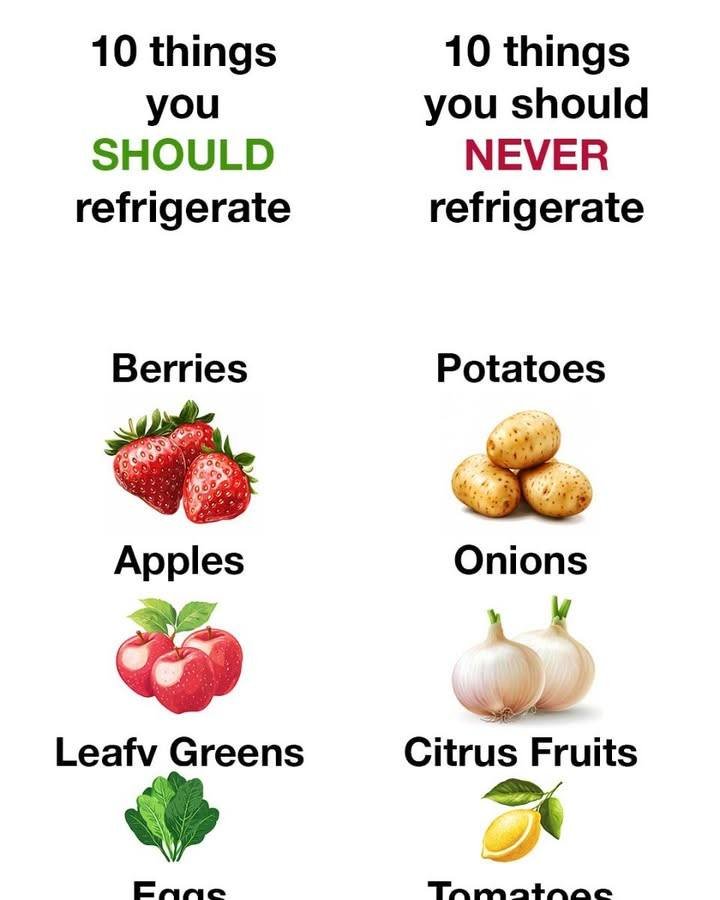
Such a good kitchen question — the fridge can either save food or quietly ruin it 😅
Here’s a clean, practical list you can actually remember.
❄️ 10 Things You Should Always Refrigerate
-
Milk & cream – spoil fast at room temp
-
Cooked leftovers – within 2 hours of cooking
-
Raw meat, poultry & fish – cold = safety
-
Eggs (in the U.S.) – keep them in the carton
-
Cut fruits & vegetables – slows bacteria growth
-
Berries – mold magnets without refrigeration
-
Leafy greens – stay fresh longer when chilled
-
Cheese – especially soft & shredded types
-
Opened sauces & condiments (pesto, salsa, mayo)
-
Fresh herbs (soft ones) – cilantro, parsley (wrap & chill)
🚫 10 Things You Should Never Refrigerate
-
Tomatoes – fridge kills flavor & texture
-
Potatoes – turns starch into sugar (weird taste)
-
Onions – moisture = mold
-
Garlic – sprouts faster in the fridge
-
Bread – goes stale quicker
-
Honey – crystallizes and thickens
-
Coffee (beans or grounds) – absorbs fridge odors
-
Bananas – peel turns black, flavor suffers
-
Whole melons – better at room temp until cut
-
Avocados (unripe) – fridge slows ripening too much
🤔 “It Depends” Foods (Quick bonus)
-
Butter → fridge for long-term, counter for short-term
-
Eggs (outside U.S.) → depends on washing practices
-
Hot sauce & ketchup → flavor vs shelf-life preference
-
Apples → last longer in fridge, taste better out
Bottom line
Refrigeration is about moisture, enzymes, and bacteria — not just “keeping things cold.” When you store foods the right way, they last longer and taste better.
If you want, I can:
-
Create a fridge organization map
-
Share produce storage hacks to double freshness
-
Tailor this list for small kitchens or meal prep